
Treats: Noise
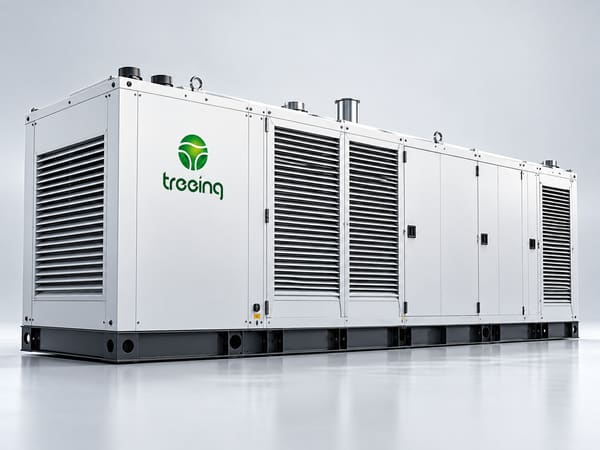
Genset acoustic enclosure
A custom enclosure that brings genset noise down to the site limit while keeping the engine cool and easy to service.
- Treats
- Noise
- Engines
- Gas and diesel gensets up to 5 MW
- Design
- Built for each genset model and site
- Silencers
- Exhaust silencers from partner manufacturers, on request
How the enclosure controls noise
- 1
Sound insulation
Enclosure walls and roof block noise from the engine, generator and radiator.
- 2
Sound absorption
An absorbing lining inside the panels reduces noise that builds up inside the enclosure.
- 3
Intake and exhaust air attenuation
Acoustic louvres and splitter silencers let cooling air in and out without letting the noise escape.
- 4
Ventilation and cooling
Air flow is designed with the engine and radiator data, so the genset runs at full load without overheating.
What the enclosure includes
- Insulated and lined wall and roof panels
- Acoustic louvres and splitter silencers for air intake and discharge
- Anti-vibration mounts
- Access doors for operation and maintenance
- Exhaust silencer from a partner manufacturer, when required
Where it is used
- Typical sites
- Power plants and energy stations near homes, offices or other noise-sensitive areas
- Fuels
- Gas and diesel gensets
- Combined with
- SCR, DPF and DOC when the same project also needs emission control
Noise results depend on the measuring point and distance. Tell us the limit and where it is measured, for example at the site boundary.
Specifications
Every system is sized for the engine and site, so we do not publish standard sizes. Send your engine data sheet and emission or noise limit, and we reply with a configuration and the values we can achieve.
What we need to size it
- Genset make, model and dimensions
- Noise limit, measuring point and distance
- Site layout and nearby noise-sensitive buildings
- Ambient temperature range and installation location
- Radiator and ventilation data from the genset supplier
Request a quote
Send the engine model, fuel and the emission limit for your site. An engineer replies with a first assessment.
- Engine make, model and number of units
- Fuel type, and a gas analysis for biogas
- NOx limit with reference O₂, and any noise limit
- Site layout or exhaust drawings, if available
Prefer to call or write directly?